Facial Lymphatic Drainage Is Rewriting the Modern Facial
For years the luxury facial was sold as a glow: brighter skin, a smoother surface, a fresher face before dinner. In 2026, the conversation is quieter and more serious. Guests are asking why their face feels heavy after flights, why skin looks puffy after a late meal, why a treatment can feel relaxing in the room but vanish by the next morning. Facial lymphatic drainage has become the answer many premium spas now reach for, not as a miracle claim, but as a gentler way to make the modern facial feel precise, restorative and credible.
This report looks at the facial lymphatic drainage trend through three lenses: the global luxury spa standard, the practical science of light-touch drainage, and the fast-growing demand for a high-quality facial treatment in Bangkok. For readers comparing treatment styles, our advanced facial treatment guide explains how facials sit beside massage, hydrotherapy and bodywork in a complete spa journey.
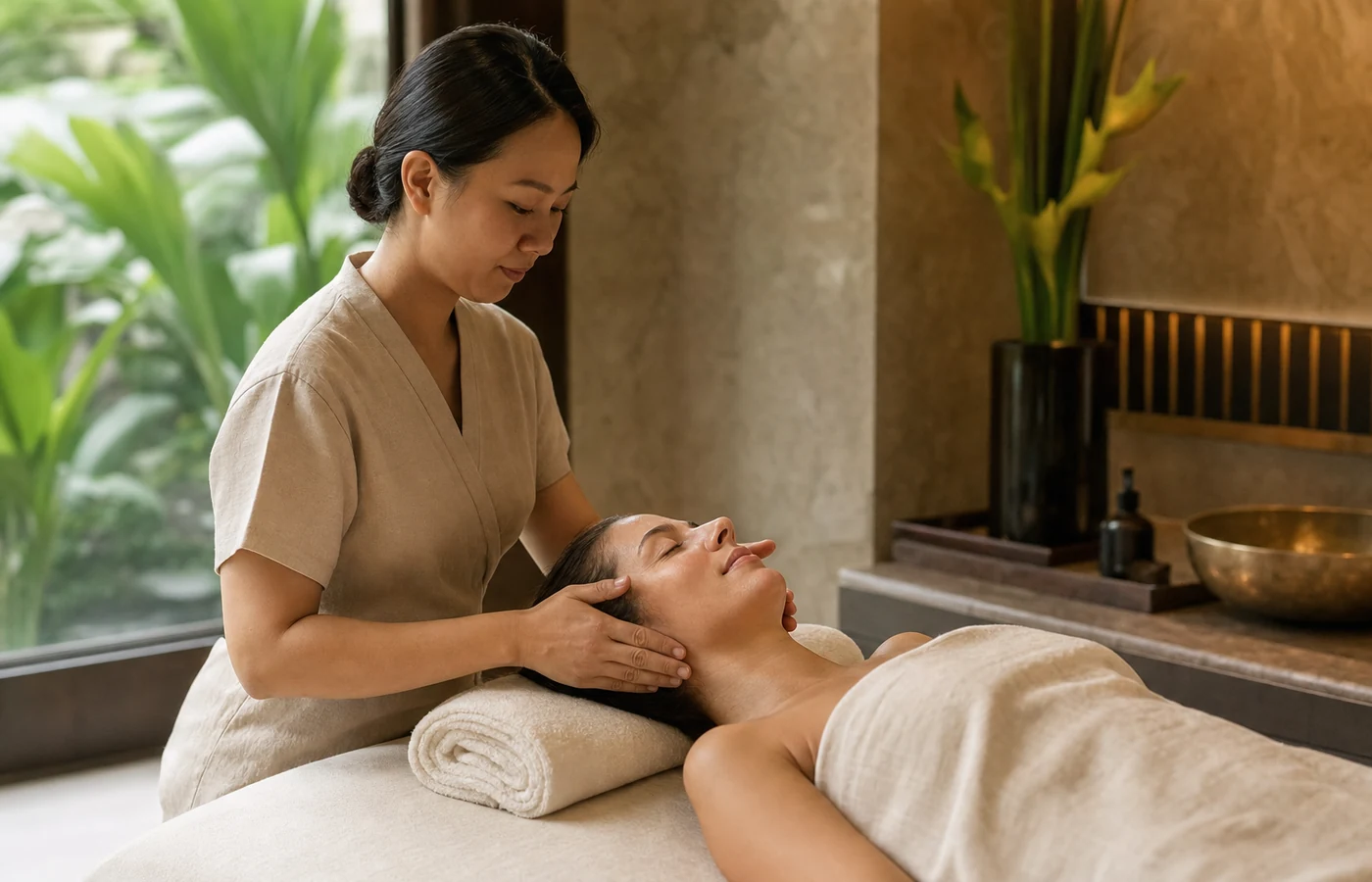
The facial is becoming less aggressive
The most interesting change in high-end skincare is not another device, peel or mask. It is a change in tone. A new generation of spa guests has become more cautious about anything that promises transformation without recovery time. They still want visible freshness, but they also want to understand what is happening to the skin barrier, the nervous system and the face after travel. That has made the facial less about dramatic correction and more about intelligent regulation.
Facial lymphatic drainage fits that shift because it is deliberately light. The therapist works with slow, directional movements around the neck, jaw, cheeks, temples and brow rather than heavy kneading. The best version does not pretend to sculpt bone or erase age. It aims to reduce the feeling of congestion, soften tension, support visible freshness and give the guest a clearer sense that the facial has been adapted to their actual condition on the day.
That nuance matters. In the luxury market, guests are tired of menu language that sounds expensive but behaves generically. A facial that begins with a real consultation, checks sensitivity, accounts for long-haul travel and uses drainage as one part of a complete sequence feels more adult. It tells the guest that the spa is not simply layering products; it is reading the face as part of the whole body.
Why lymphatic language has entered the mainstream
The lymphatic system was once discussed mostly in medical, post-surgical or specialist massage settings. Now the language appears in beauty editorials, hotel spa menus, esthetician social feeds and celebrity-prep routines. Some of that attention is useful; some of it is inflated. The important point is that consumers have learned to ask better questions. They know that puffiness can be connected to sleep, alcohol, sodium, flights, stress, hormones and inflammation. They also know that the face can reveal the tempo of a life very quickly.
Manual lymphatic drainage is generally described by clinical sources as a gentle massage technique intended to encourage the movement of lymph fluid. That does not make a spa facial a medical treatment. It does mean that language around pressure, direction, contraindications and expectations should be handled carefully. A credible luxury spa will not promise detoxification, disease treatment or permanent contouring. It will explain that light-touch work can be part of a calming, circulation-aware, de-puffing facial experience for appropriate guests.
The trend also reflects a larger wellness mood. The Global Wellness Institute continues to track the wellness economy as a major global market, and the guest behavior behind that market is visible inside treatment rooms: people want recovery, sleep support, stress reduction and skin health, not just pampering. Facial lymphatic drainage gives spas a bridge between beauty and recovery. It sounds refined, but it also feels practical after a red-eye flight, a week of meetings or a humid day in Bangkok.
What a high-quality facial lymphatic drainage treatment should feel like
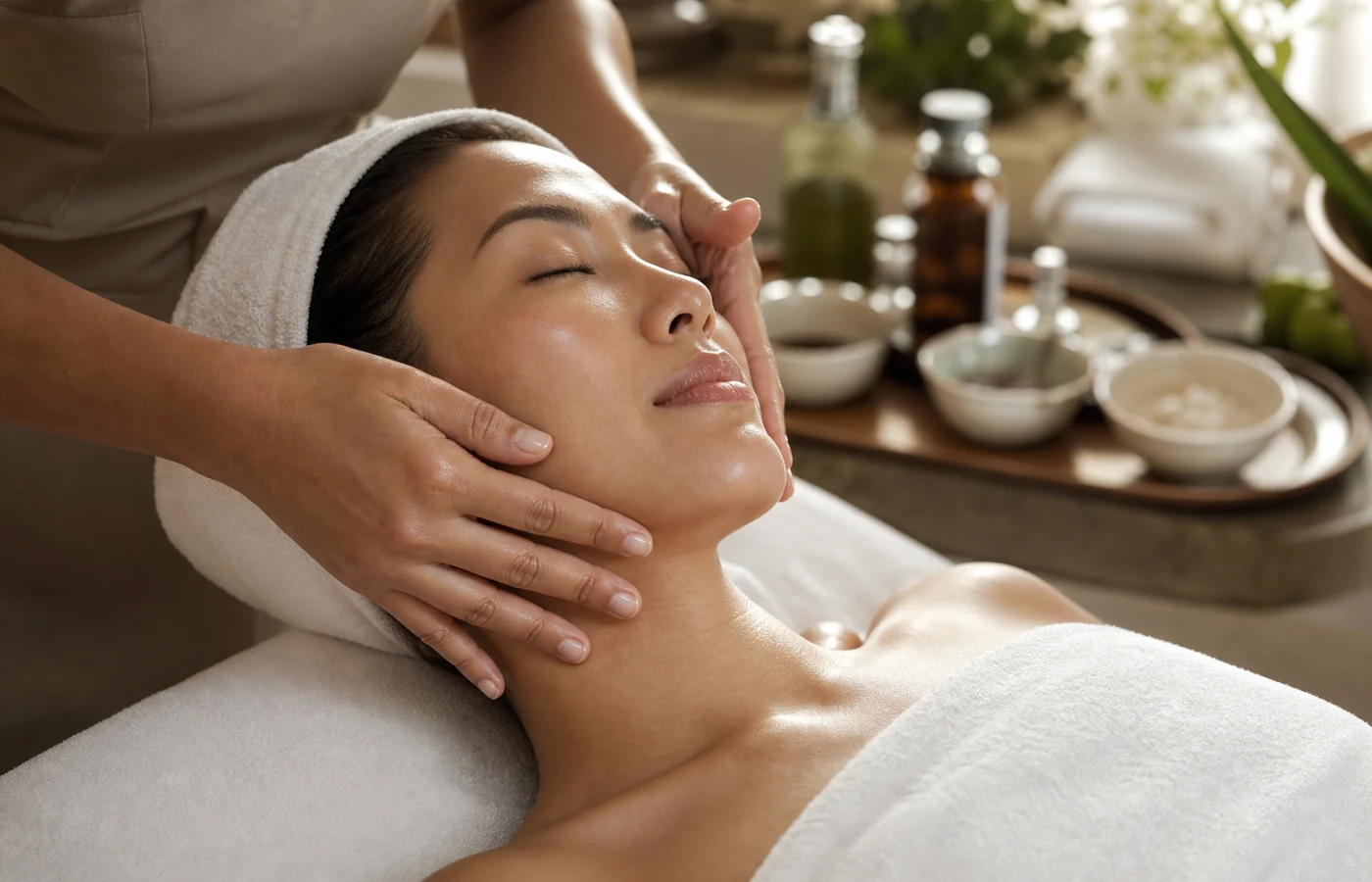
A good facial lymphatic drainage session is almost the opposite of a showy massage. The pressure is feather-light to moderate, never forceful. The rhythm is slow enough for the nervous system to downshift. The therapist usually opens the neck and collarbone area before moving across the lower face, cheeks, nose area, temples and forehead. The guest should not feel pulled, pinched or bruised. If the treatment leaves the skin angry, the pressure was probably wrong or the sequence was poorly chosen.
The visible result is usually subtle: a less tired look, a softer jawline, a more rested expression, better product absorption and a feeling that the face is less tense. The deeper value is often sensory. Many guests describe the face feeling lighter, the breathing quieter, the head clearer. That is why the technique works so well in a premium facial. It gives the esthetician time to work, while giving the guest a treatment that feels both precise and deeply relaxing.
Technique is only one part of the experience. The room matters. Warm towels, clean linen, dimmable light, quiet acoustics and unhurried transitions all change how the face responds. A rushed drainage facial is a contradiction. The entire appointment needs to move at the same speed as the hands.
The five global spa benchmarks to watch
When people ask for the best facial in the world, the honest answer is that the best treatment depends on the guest: skin type, sensitivity, travel fatigue, climate, budget and whether the goal is glow, recovery or clinical support. Still, the top end of the spa world gives useful benchmarks. In the current World Luxury Spa Top 100, the five highest-ranked properties show how luxury wellness is being measured beyond product choice alone.
- Palazzo Fiuggi, Italy: a wellness retreat benchmark for structured recovery, nutrition-led programs and high-touch guest guidance.
- The Spa at Mandarin Oriental, Costa Navarino, Greece: a resort spa reference for service choreography, setting and a polished hospitality journey.
- Chenot Espace at One&Only Portonovi, Montenegro: a medical-wellness-influenced model where assessment, recovery and luxury service meet.
- WORLD SPA, New York: an urban day spa example, important because city guests often need visible recovery in a short appointment window.
- SPA 3000 at AQUA DOME - Tirol Therme Laengenfeld, Austria: a thermal and mineral spa benchmark where sequencing, heat, water and rest define the value.
Not all five are facial specialists, and that is exactly the lesson. The best modern facial is not just a beauty service. It borrows from the standards these properties represent: consultation, pacing, privacy, sensory control, informed technique and aftercare. A facial lymphatic drainage treatment that claims luxury status should be judged by the same criteria.
Why Bangkok is a natural city for the trend
Bangkok is an unusually strong city for facial treatments because it sits at the intersection of travel, humidity, beauty culture and hands-on spa craft. Guests arrive after long flights, cross time zones, spend hours in air conditioning, then step into heat and tropical moisture. Skin can look dull in the morning, oily by midday and dehydrated by evening. That makes the city a perfect test for any facial that claims to restore balance rather than simply polish the surface.
The best Bangkok facial has to be practical. It should cleanse without stripping, hydrate without heaviness, calm redness, respect sunscreen use, and acknowledge that many guests are fitting the treatment between shopping, meetings, sightseeing or a massage. Facial lymphatic drainage is useful in this setting because it can make the appointment feel restorative without being harsh. A guest can leave relaxed, presentable and not overly sensitized.
For travelers searching specifically for a facial in Bangkok, Loft Thai Spa's facial page is a relevant local reference because it positions facials inside a broader Thai spa environment rather than as a clinical quick fix. That distinction is important. Bangkok does not need to copy the medical-aesthetic mood of every global capital. Its strength is the combination of service warmth, tactile skill, accessible luxury and a treatment rhythm that helps the body settle after travel.
What guests should ask before booking
The popularity of lymphatic drainage has also made it vulnerable to vague marketing. A spa menu may mention drainage without explaining who performs it, how it is sequenced, what pressure is used or when it is not appropriate. Guests should ask simple, grounded questions. Is the technique manual or device-led? Does the therapist begin with the neck? Is the pressure light? Is the facial suitable after injectables, surgery, active acne, infection, fever or recent laser treatment? How will the therapist adapt if the skin is sensitive?
A serious spa will welcome these questions. It may recommend waiting after certain procedures, choosing a gentler facial, skipping drainage around inflamed areas or speaking with a healthcare provider first. This is not a failure of luxury; it is the foundation of trust. The face is intimate. A guest should never feel pushed into a technique because it is fashionable.
There is also a difference between a good drainage facial and a facial massage that merely feels pleasant. The former has intention: direction, pace, sequence, product compatibility and aftercare. The latter may still be enjoyable, but it should not be sold with stronger claims than it can support. In a mature spa market, clarity is part of the service.
The signals editors look for
When we evaluate a facial as part of a luxury spa experience, we look beyond the treatment name. The strongest signs appear before the guest reaches the bed: the receptionist can explain the difference between hydration, brightening, sculpting language and drainage; the therapist checks recent procedures and sensitivity; the room is prepared before the guest enters; and the menu does not hide contraindications behind poetic copy. A premium facial should feel beautiful, but the operation behind it should feel disciplined.
During the treatment, the key signals are quiet confidence and adjustment. A skilled esthetician changes pressure around the eyes, slows down when the jaw is tense, avoids overworking reactive skin and uses product texture to reduce friction rather than impress the guest with a complicated routine. After the treatment, the best spas do not rush the mirror moment. They give the guest time to re-enter the room, explain what they noticed, and offer two or three useful aftercare points instead of a long retail speech.
This is why facial lymphatic drainage is such a revealing trend. It exposes whether a spa understands the difference between luxury as surface and luxury as care. The technique is simple enough to name, but difficult to perform with restraint.
The role of products, devices and hands
Facial lymphatic drainage has become fashionable partly because it photographs beautifully. Hands glide along the jawline, a cool tool rests against the cheek, serum catches the light. But the best spas know that products and devices should support the hands, not replace judgment. A gua sha stone, roller, cooling globe or microcurrent device can be useful in the right context, but none of them rescues a poorly designed facial.
The product strategy should match the goal. If the guest is travel-puffy and dehydrated, the facial may focus on gentle cleansing, humectants, barrier-supporting creams and a calm massage sequence. If the skin is congested, the therapist may need to be more careful: aggressive extraction plus drainage can be too much for some guests. If the guest has rosacea, active irritation or post-treatment sensitivity, the safest path may be a cooling, minimal facial with less friction.
The hands remain the luxury signal because they can listen. A trained esthetician can feel heat, texture, swelling, tension and the guest's response in real time. That adaptability is why manual work continues to matter in a market full of tools. The most expensive device in the room is not necessarily the most intelligent part of the treatment.
Why the trend appeals to men and frequent travelers
The facial lymphatic drainage trend is also widening the audience for facials. Many men who are not interested in a traditional beauty facial are interested in looking less tired before a meeting, recovering from travel or relieving jaw tension. The language of drainage, recovery and circulation can feel more functional, and therefore more comfortable. For spas, that creates an opportunity to make facials less gendered and more outcome-led.
Frequent travelers are another natural audience. Long flights, alcohol, disrupted sleep, salty meals and dry cabin air create the exact facial cues people notice in a hotel mirror: puffiness around the eyes, heaviness in the lower face, dullness, tightness and a slightly gray tone. A well-designed facial in Bangkok or any major travel city can become part of arrival recovery, not just a holiday treat.
This is where luxury hotels and day spas need to be honest about timing. A 45-minute express facial may help a guest look fresher, but it cannot do the same work as a 90-minute treatment with consultation, drainage, mask, rest and aftercare. The menu should make that difference clear. Guests are willing to pay for expertise when they can understand what the extra time buys.
Aftercare is where the result is protected
A facial lymphatic drainage treatment should not end at the mirror. The aftercare is part of the result. Guests should be encouraged to drink water, keep the evening simple, avoid heavy alcohol, protect the skin from sun, delay aggressive exfoliation and give the face time to settle. If the facial includes active ingredients, the therapist should explain what to avoid that night and the next morning.
In Bangkok, aftercare needs to account for climate. Heat, sweat and pollution can undo the calm of a facial if the guest immediately walks into traffic without sunscreen or rehydrates with a cocktail rather than water. A good spa will not lecture, but it will give practical guidance: when to apply SPF, whether to skip makeup for a few hours, how to cleanse gently and when to schedule the next appointment if the guest is staying longer.
The best aftercare is short, specific and memorable. Guests do not need a lecture on the lymphatic system. They need to know what to do tonight, what to avoid tomorrow and when to seek professional advice if something feels wrong. That is the difference between a trend and a properly managed treatment.
The editorial verdict
Facial lymphatic drainage deserves its place in the luxury spa conversation, but only when it is treated with restraint. Its power is not in exaggerated before-and-after claims. Its power is in how it changes the rhythm of the facial: slower hands, better consultation, lighter pressure, calmer skin, more attention to the neck and jaw, and a more realistic conversation about travel, sleep and stress.
For the world's top spas, the trend is a reminder that beauty services are now judged by the same standards as wellness retreats: credibility, personalization, safety, service flow and aftercare. For Bangkok, it is an opportunity. A premium facial in Bangkok can be more than a glow appointment. Done well, it can become a compact recovery ritual for travelers who want their face, breath and nervous system to arrive at the same time.
The modern facial is not disappearing. It is growing up. And facial lymphatic drainage, handled honestly, is one of the clearest signs of that maturity.
Sources and editorial notes
This article uses public, reader-verifiable sources for medical caution, market context and Bangkok treatment reference. Rankings mentioned above refer to the World Luxury Spa Top 100 pages on this site.
- Cleveland Clinic: background on lymphatic drainage massage and why gentle pressure and suitability matter. Read the medical overview.
- Global Wellness Institute: current wellness economy context for the growth of recovery-led wellness demand. See the 2025 Global Wellness Economy Monitor.
- Loft Thai Spa: official Bangkok facial treatment page used for the local service reference. View Loft Thai Spa facial treatments.