Thailand’s $42.7 Billion Wellness Moment: What It Will Take to Reach Asia’s Top Five
Thailand has set itself a striking goal: move from the ninth-largest wellness economy in Asia-Pacific into the region’s top five by 2030. The ambition arrives at a credible moment. Global Wellness Institute data values the country’s wellness economy at US$42.7 billion in 2024, while wellness-tourism spending reached US$14 billion after 36.4 per cent annual growth. The spa sector grew by 18 per cent, with spending at destination and hotel or resort spas rising by more than 20 per cent.
Scale, however, is only the headline. The more consequential question is whether Thailand can turn a famous service culture, living therapeutic traditions, medical capability and extraordinary hospitality infrastructure into a coherent, trusted wellness system. This World Luxury Spa report examines what the five-year plan means for travellers and operators, where the country already leads, and which standards will decide whether growth creates lasting value. It complements our guides to medical wellness retreats and signature treatments worth travelling for.
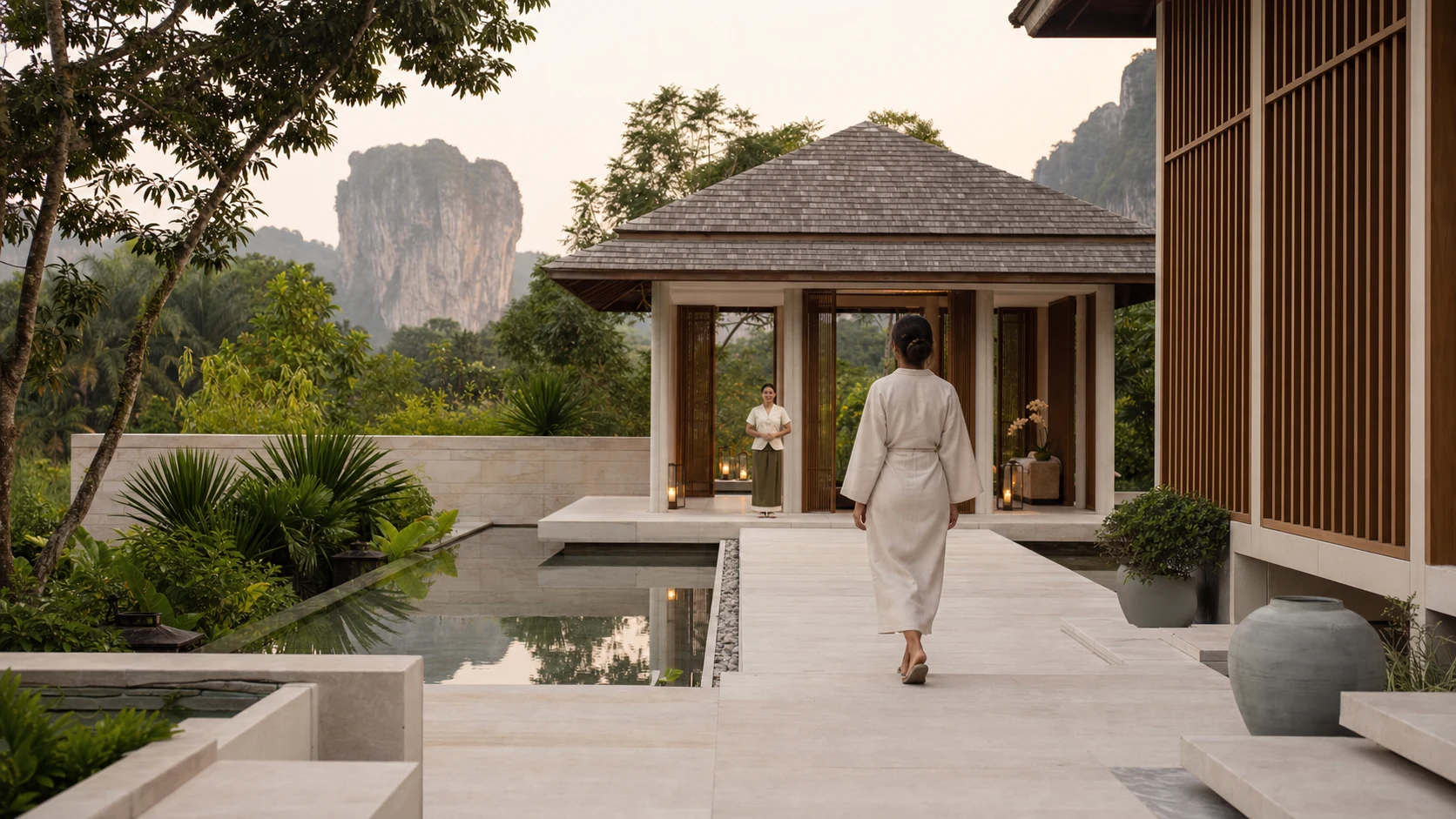
The news behind the number
Spa Business reported on 26 July 2026 that the Thai Spa Association intends to help move Thailand from ninth place into the top five Asia-Pacific wellness economies by 2030. The roadmap progresses from connection in 2026 to professional development in 2027, regional collaboration in 2028, scalable operating models in 2029 and higher-value national positioning in 2030. It also introduces a proposed continuing-education passport, stronger management pathways and export-ready Thai wellness concepts.
The plan is broader than a campaign for more spa bookings. It attempts to connect tourism, health, education, finance, technology, communities and private enterprise. That breadth matters because a wellness economy includes far more than treatments delivered inside a resort. It spans physical activity, healthy eating, mental wellness, public health, beauty and personal care, traditional medicine, wellness real estate, thermal and mineral springs, workplace wellness and wellness tourism.
A country can therefore rise in a ranking while still delivering an uneven guest experience. It can also create excellent spas without building a resilient workforce or protecting the culture that makes its offering distinctive. Thailand’s real test is to grow the parts together: commercial sophistication, professional care, local participation, evidence, environmental discipline and a recognisable sense of place.
Thailand already has an unusual competitive advantage
Few destinations can combine a global tourism brand, internationally used airports, mature hotel infrastructure, respected private healthcare, tropical resort geography, urban luxury and a therapeutic tradition recognised by UNESCO. Bangkok can support a three-hour recovery ritual between business meetings. Phuket and Koh Samui can host long-stay resort programmes. Northern Thailand brings forest, craft, food and slower rhythms into the wellness journey. Secondary destinations can connect hot springs, herbs, agriculture and community knowledge.
Thailand also offers a wide price spectrum. A traveller can encounter skilled bodywork in a modest neighbourhood setting, a carefully choreographed treatment in a five-star hotel or a multi-day programme combining diagnostics, movement, nutrition and recovery. That breadth encourages experimentation and repeat visits. It also creates a responsibility: “Thai wellness” cannot become a label applied equally to every service regardless of training, hygiene, consent, claims or working conditions.
The country’s strongest advantage may be less visible than its facilities. It is the ability to make care feel warm without becoming intrusive. The Thai Spa Association describes this through the idea of Jai: meaningful, authentic and intelligent care. For luxury guests, that quality is felt in pacing, anticipation, modesty, attention to comfort and the therapist’s ability to adapt without turning the treatment into a performance.
From “healing is the new luxury” to a verifiable promise
The Tourism Authority of Thailand’s “Healing is the New Luxury” direction is commercially astute. Modern luxury travellers increasingly value time, sleep, privacy, mobility, emotional restoration and meaningful cultural contact more than decorative extravagance. Thailand is well placed to serve that shift. Yet the word “healing” carries more responsibility than “relaxation”, especially when marketing moves toward longevity, mental health, rehabilitation or medical wellness.
The premium version of the promise should be precise. A massage may help a guest relax, feel less stiff or reconnect with the body, but it should not be advertised as a guaranteed cure. A retreat may support healthier routines without replacing medical care. A diagnostic programme should explain who interprets the results, what is clinically actionable and where the boundaries of the service lie. More ambitious language requires stronger governance, not simply more beautiful photography.
For travellers, credibility will become a luxury signal in its own right. Clear practitioner qualifications, realistic outcomes, informed consent, discreet data handling, transparent prices and a visible escalation process reduce uncertainty. The best Thai properties already understand this. The 2030 opportunity is to make those practices easier to recognise across the market.
Nuad Thai must remain a living practice, not a decorative theme
UNESCO inscribed Nuad Thai on the Representative List of the Intangible Cultural Heritage of Humanity in 2019. The designation describes it as part of the art, science and culture of traditional Thai healthcare, shaped by community knowledge and developed over generations into a formal practice and income-generating occupation. This history gives Thailand an authenticity that cannot be manufactured by importing equipment or copying a global treatment menu.
Heritage, however, is not a licence to freeze a practice in time. Living traditions survive through skilled teachers, apprentices, documentation, adaptation and respect for the people who carry the knowledge. A luxury resort should know who designed its Thai treatment, how practitioners were trained, which elements are traditional, which are contemporary adaptations and how the source community benefits. A generic “ancient ritual” description is no longer enough.
The most compelling future is not a choice between tradition and innovation. It is a disciplined conversation between them. A property might combine Thai bodywork with modern movement assessment, or use locally grown herbs within a carefully documented thermal protocol. The guest should understand what each element contributes, without cultural knowledge being reduced to costume, scent and background music.
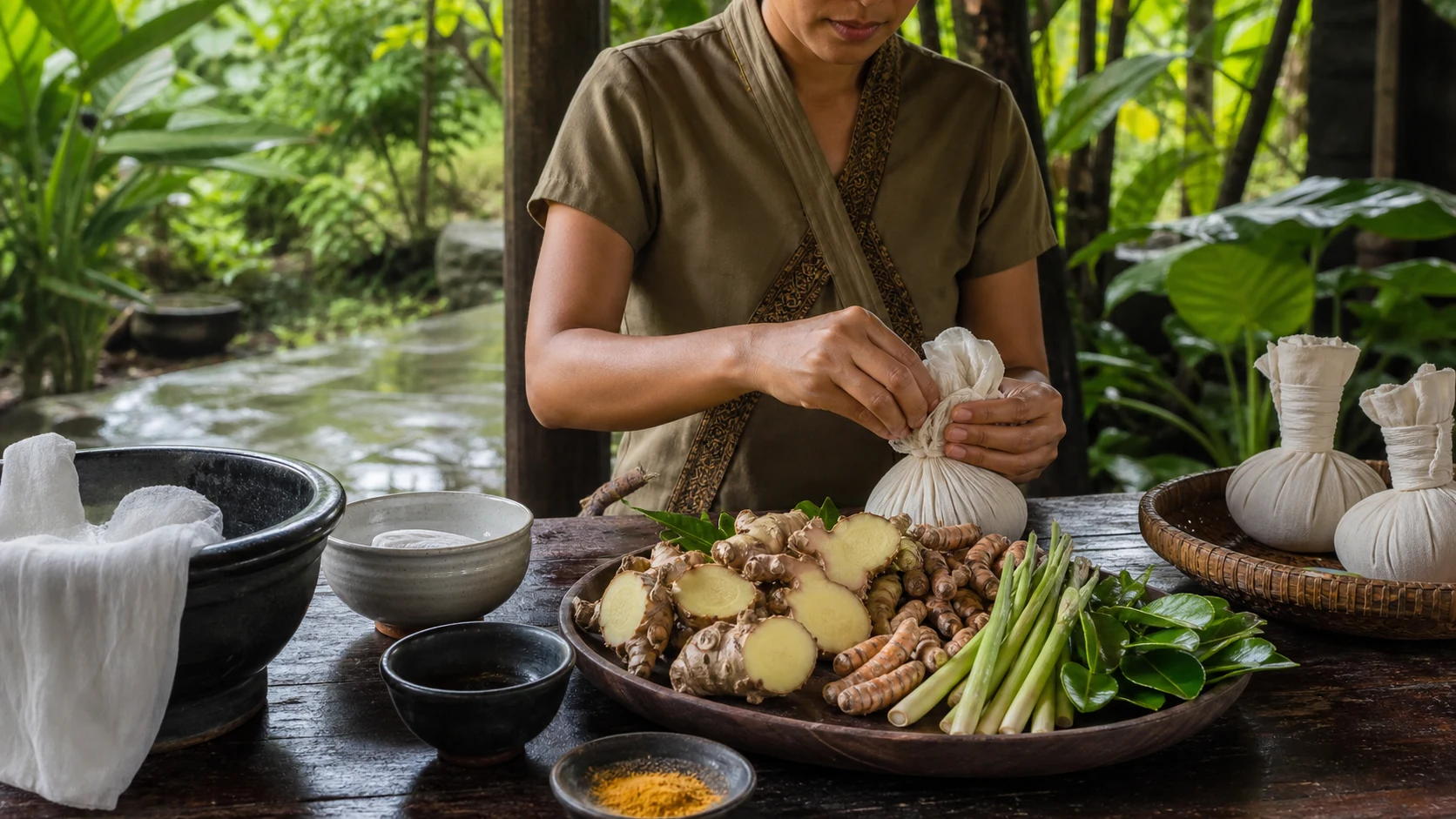
The therapist is the essential luxury infrastructure
Buildings can be financed quickly; mastery cannot. The government’s July 2026 collaboration with universities, healthcare organisations and the Thai Spa Association recognises the constraint. Its proposed therapist programme links education, standards, certification, employment and a digital professional database. This is important because guest demand can grow faster than the supply of skilled practitioners, creating pressure to shorten training, increase treatment loads or promote excellent therapists into management without support.
A serious workforce strategy must look beyond technique. Therapists need anatomy within their scope, contraindication screening, draping, consent, cross-cultural communication, infection control, product knowledge, emergency procedures, disability awareness and the confidence to stop an inappropriate treatment. Supervisors need coaching, scheduling, incident review and service-recovery skills. Managers need revenue literacy without turning every consultation into a sales target.
Career design matters too. A practitioner cannot deliver calm, attentive touch through an unsustainable schedule. Recovery time between demanding treatments, fair compensation, predictable breaks, psychological safety and routes into training or management are not backstage concerns. Guests can feel the difference between a supported professional and an exhausted pair of hands.
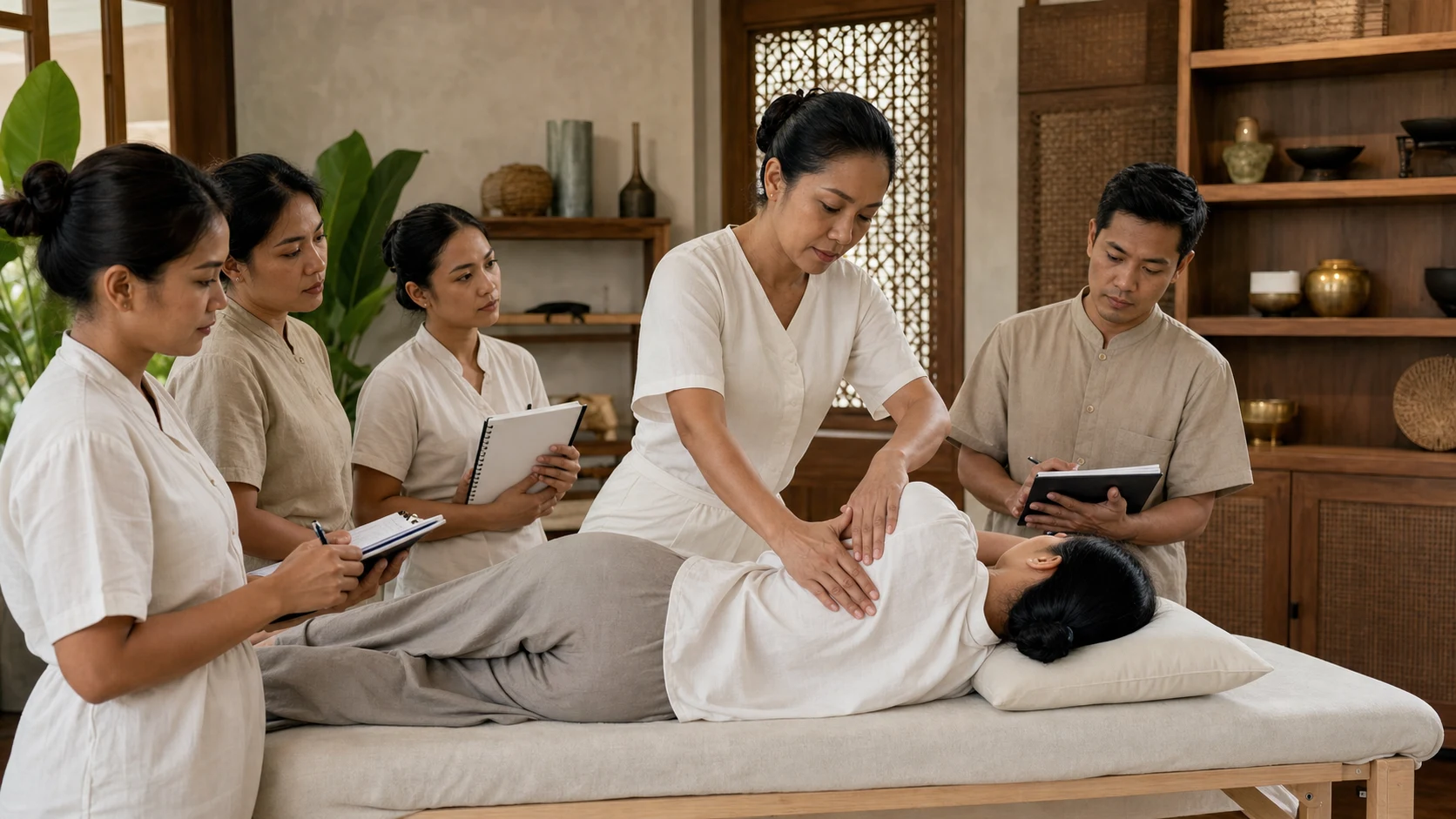
Standards must be visible before the guest books
The ASEAN Spa Services Standard provides a useful regional framework covering the place, people, treatments, products, equipment, management and environment. Thailand also operates national requirements and voluntary quality programmes. The challenge for a traveller is not the absence of standards; it is knowing which standard applies, who verified it, when it was last checked and what the mark actually guarantees.
The next generation of certification should be legible on a phone. A guest should be able to confirm the establishment, practitioner category, treatment scope, safety provisions and current status without decoding a wall of logos. Verification should also distinguish between mandatory compliance, premium service recognition, sustainability performance and medical accreditation. Combining everything under one vague badge weakens trust.
For luxury operators, transparency is an advantage rather than a burden. Showing the training behind a signature ritual, the audit date for the wet areas or the qualifications of a medical lead gives substance to the rate. It also makes comparison fairer. The market becomes less dependent on influencer visibility and more responsive to operational quality.
Medical wellness and spa hospitality need a clear boundary
Thailand’s private hospitals and preventive-health centres are a major asset. They can support international travellers seeking health assessments, dental care, rehabilitation, fertility services or longer-stay programmes. The opportunity becomes more complex when clinical services are packaged with spa rituals, supplements, beauty treatments and longevity language under a single wellness itinerary.
A responsible programme separates licensed diagnosis and treatment from hospitality-led wellbeing. It names the clinician responsible for clinical decisions, uses validated tests for a defined purpose, explains data privacy and provides a plan for follow-up after the guest returns home. The spa team should receive only the information needed to adapt the service safely. A therapist does not need access to an entire medical record to adjust pressure or avoid heat.
The finest integrated resorts will not make every guest feel like a patient. They will translate clinical rigour into a calm journey: clear pre-arrival screening, unhurried consultations, protected recovery time, nourishing food and a realistic home plan. Medical credibility and Thai hospitality should strengthen each other without blurring accountability.
Mental wellness deserves more than a quiet room
Mental wellness is one of the growth areas identified in Thailand’s strategy. It is also vulnerable to loose language. Meditation, breathwork, sound, nature immersion, sleep routines and restorative movement can support wellbeing for many guests. They are not substitutes for qualified mental-health care, and facilitators should not be encouraged to diagnose trauma or promise emotional transformation beyond their competence.
Properties can build a safer offer by screening appropriately, describing sessions accurately, training staff to recognise distress and establishing referral or emergency pathways. Group activities should explain what participation involves and make opting out easy. Privacy matters in retreat settings, where guests may share personal experiences in a socially intense environment.
Luxury in this category is not theatrical spirituality. It is psychological safety, excellent facilitation, enough time to integrate the experience and a programme that does not manufacture vulnerability for effect. Thailand’s contemplative traditions and natural settings can inspire meaningful experiences when handled with humility.
Wellness real estate can extend the journey—or dilute it
Wellness real estate is another fast-growing part of Thailand’s market. Residences built around air quality, movement, nature, healthy food, community and access to care can extend wellbeing beyond a short retreat. For international buyers and long-stay visitors, Thailand offers climate, hospitality and service ecosystems that make the proposition attractive.
Yet a spa, yoga deck and biophilic lobby do not automatically create a healthy place. Credible projects should address heat, water, energy, walkability, accessibility, noise, indoor air, food access and the needs of permanent staff as well as residents. They should explain which services are included, which require payment and how health data or emergency care is managed.
The most valuable developments will connect rather than isolate. They can source from nearby farms, support local practitioners, create public-facing amenities and invest in landscape resilience. A gated wellness enclave that consumes scarce resources while offering a private version of nature would undermine the national story.
Growth should distribute value beyond famous destinations
Bangkok, Phuket, Samui and Chiang Mai will remain major gateways, but Thailand’s wellness map is wider. Hot-spring regions, agricultural communities, coastal towns and provinces with strong herbal or craft knowledge can create distinctive journeys. Dispersing value can reduce pressure on the most visited destinations and give travellers a reason to stay longer.
This does not mean turning every community practice into a tourist product. Development should begin with local consent, realistic capacity and ownership. Small operators need access to training, digital distribution, language support, insurance and fair commercial agreements. Hotels should pay appropriately for knowledge and materials rather than presenting community participation as free “authenticity”.
For the luxury guest, the result can be richer than another imported wellness concept. A well-designed route might connect a refined city spa, a forest stay, local food, gentle movement and a workshop led by a recognised practitioner. The value comes from depth and continuity, not from collecting activities.
Sustainability will determine whether the promise can scale
Wellness travel depends on clean air, reliable water, healthy landscapes and liveable communities. These assets cannot be treated as scenery. Thermal facilities consume energy and water; laundries process large volumes of linen; treatment menus create packaging and product waste; imported ingredients increase transport impacts; island destinations face particular pressure on water and waste systems.
A credible Thai wellness property should measure the operational basics before making expansive regenerative claims. Water per guest night, energy by facility, linen cycles, local sourcing, waste diversion, chemical use and staff transport are practical starting points. The guest experience can then be designed around lower-impact choices without feeling austere: shaded architecture, natural ventilation where appropriate, refillable amenities, seasonal food and treatments that use fewer disposable components.
Sustainability also includes cultural and human continuity. Protecting teacher lineages, paying skilled practitioners fairly and keeping local communities economically involved are forms of preservation. A wellness economy is not resilient if its landscapes, knowledge holders or workforce absorb the hidden cost of growth.
Technology should verify care, not replace it
Digital infrastructure can make the 2030 plan more useful. A continuing-education passport could help practitioners carry verified records between employers. Travellers could check certifications. Operators could benchmark training, incidents and sustainability performance. Better booking data could reduce mismatched treatments and remember preferences with consent.
The risk is collecting more sensitive information than the service needs. Wellness profiles can include health histories, body measurements, sleep patterns, stress scores and travel documents. Every platform should define who can see the data, how long it is stored, whether it is used for marketing and how the guest can correct or delete it. Convenience should not quietly become surveillance.
Artificial intelligence can support translation, scheduling and pattern detection, but it should not impersonate clinical judgment or therapist intuition. Thailand’s comparative advantage is human care. The best technology will remove administrative friction so that professionals have more attention for the guest.
What a top-five strategy should measure
Revenue and regional rank are clear, communicable targets, but they cannot show whether the experience is improving. A mature scorecard would also track practitioner retention, continuing-education completion, verified establishments, safety incidents, guest trust, local procurement, community revenue, water and energy intensity, accessible services and the proportion of wellness claims supported by credible evidence.
Quality measures should distinguish scale from value. More visits may indicate demand, while higher length of stay and repeat visitation may better reflect depth. Increased average spend can be positive if it comes from better programmes and fairer wages; it is less meaningful if it comes mainly from price inflation or aggressive retail. Regional distribution can reveal whether growth reaches beyond the largest tourism centres.
Publishing progress would strengthen the national brand. Travellers and investors do not need a perfect picture. They need a reliable one. Transparent reporting shows that Thailand is confident enough to measure the difficult parts of wellness, not only celebrate the market size.
What luxury travellers should look for now
The 2030 vision is still being built, but guests can already use sharper criteria. Before booking, ask who delivers the treatment, what training is required, how the property handles contraindications and whether the promised outcome is realistic. For a medical programme, identify the licensed clinical lead and the follow-up process. For a retreat, review the daily intensity, group expectations and opt-out policy.
Look for evidence of place rather than a decorative Thai theme. Are herbs or products traceable? Is a traditional treatment properly explained? Does the property employ local expertise in meaningful roles? Is the food connected to the programme? Does the itinerary leave time for rest? The strongest experience should feel distinctly Thai without treating culture as a prop.
Finally, observe how the organisation treats its people. Stable teams, confident explanations and unhurried transitions are signs of a healthy operation. A beautiful treatment room can be copied. A culture of professional care is far harder to reproduce.
The editorial verdict
Thailand has the assets to become one of Asia-Pacific’s defining wellness economies: a US$42.7 billion market, rapid tourism growth, global hospitality reach, modern healthcare, extraordinary landscapes and a therapeutic heritage with genuine international recognition. Its ambition is not implausible. The more interesting question is what kind of top-five market it chooses to become.
If the strategy rewards credible standards, continuing education, dignified careers, cultural stewardship, local value and environmental restraint, growth can deepen what travellers already love about Thai wellness. If it prioritises volume, inflated claims and exportable aesthetics without investing in the people and places behind them, the brand may become larger but less distinctive.
The true luxury opportunity is not to make Thailand look more like every other global wellness destination. It is to make the quality of Thai care easier to verify, more sustainable to deliver and more rewarding for everyone who creates it.
Frequently asked questions
How large is Thailand’s wellness economy?
The Global Wellness Institute valued Thailand’s wellness economy at US$42.7 billion in 2024. That placed the country 24th globally by market size and ninth in Asia-Pacific, with 10.1 per cent growth from 2023.
What is Thailand trying to achieve by 2030?
The Thai Spa Association has outlined a five-year collaboration intended to move the country into the top five wellness economies in Asia-Pacific. Priorities include professional education, standards, regional cooperation, stronger management and scalable Thai wellness concepts.
Why is Nuad Thai important to the strategy?
Nuad Thai gives Thailand a living system of practice and knowledge that is internationally recognised. UNESCO inscribed traditional Thai massage on its Representative List of the Intangible Cultural Heritage of Humanity in 2019.
Does a wellness service in Thailand count as medical care?
Not necessarily. Spa and hospitality services should not be confused with diagnosis or medical treatment. Clinical programmes should identify the licensed provider responsible, explain the evidence and risks, protect health data and provide appropriate follow-up.
How can travellers identify a credible Thai wellness experience?
Look for clear practitioner qualifications, transparent treatment scope and prices, contraindication screening, realistic claims, current certification, respectful use of Thai culture, good staff continuity and specific sustainability practices.
Sources and further reading
- Spa Business: the 26 July 2026 report that introduced the Thai Spa Association’s top-five Asia-Pacific goal and five-year roadmap. Read the source report.
- Global Wellness Institute: 2026 country data on Thailand’s US$42.7 billion wellness market, tourism growth and spa-sector expansion. Review the market data.
- Royal Thai Government: overview of Thailand’s 2025–2034 Global Health Hub strategy, including workforce, traditional medicine, wellness routes and service development. Read the strategy overview.
- Thailand Government Public Relations Department: July 2026 announcement of the Thai Wellness Therapist Program and cross-sector training partnership. Read the programme announcement.
- UNESCO: official record for Nuad Thai on the Representative List of the Intangible Cultural Heritage of Humanity. Explore the heritage record.
- ASEAN Secretariat: regional Spa Services Standard covering professional practice, facilities, management and client wellbeing. Read the standard.
Editorial note: The three photographs in this report are original AI-generated editorial illustrations created for World Luxury Spa. They do not depict a named property, institution or individual.