Temazcal Without Theatre: A Cultural Standard for Luxury Wellness
The temazcal is entering a new phase of luxury travel. Across Mexico, hospitality designers are placing rounded steam chambers beside treatment rooms, pools and fitness studios, presenting an ancestral practice through contemporary architecture. The visual language is powerful: earth, darkness, heat, volcanic stone and the promise of reconnection. Yet the more desirable the experience becomes, the more important it is to ask what has travelled with the building—and what has been left behind.
A temazcal is not simply a Mexican sauna with a more evocative name. It belongs to living, diverse systems of community knowledge, bathing, care and ritual that long pre-date the modern spa. A credible luxury interpretation therefore requires more than an adobe dome and an aromatic infusion. It needs community relationships, precise language, guest consent, operational safety, fair benefit and restraint around medical or spiritual claims. This is the difference between using culture as atmosphere and treating it as a responsibility.
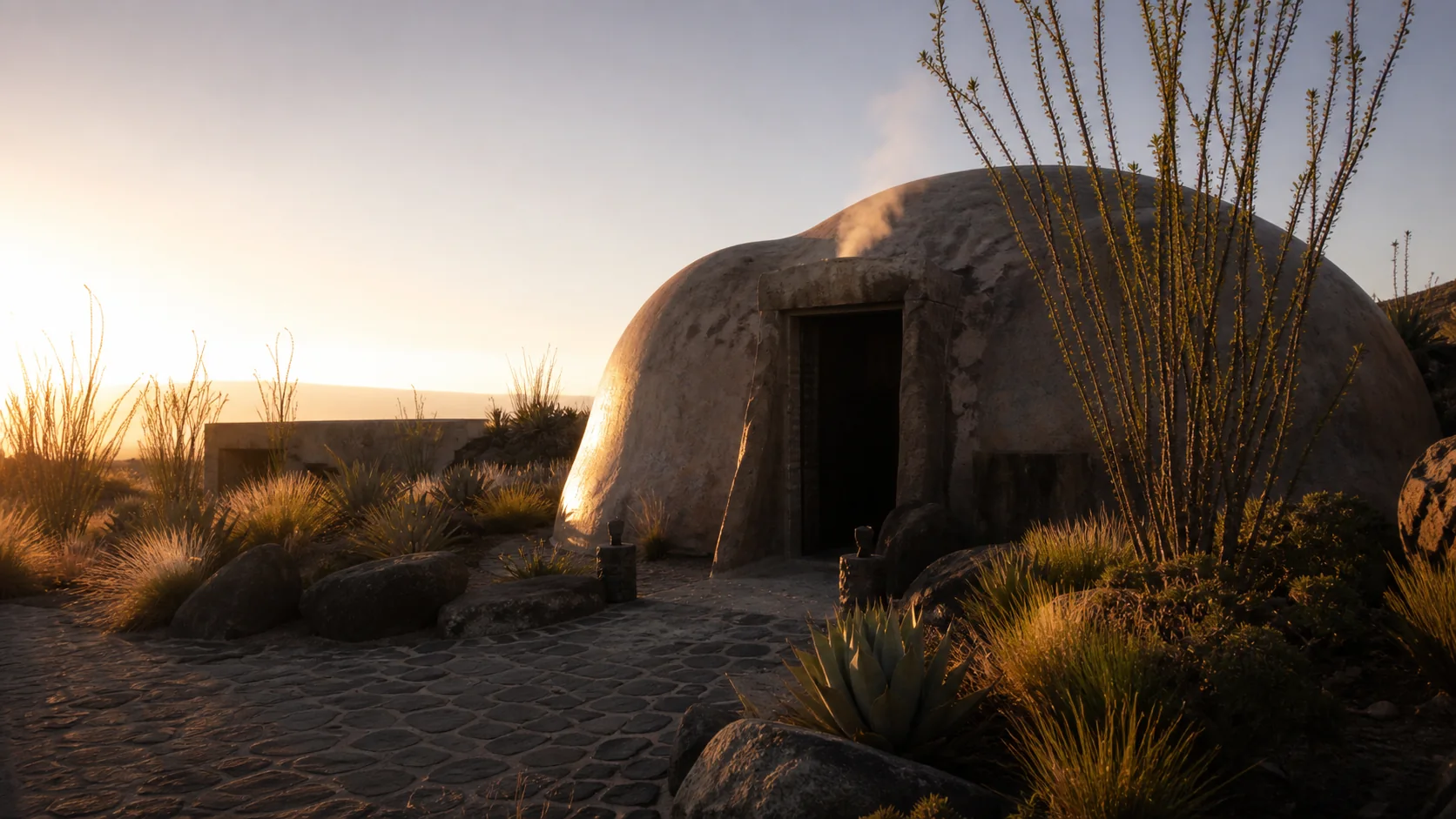
The signal: the contemporary temazcal is becoming a luxury-spa signature
Spa Business reported on 5 August 2026 that a newly opened Mexican resort had made a contemporary temazcal central to its spa journeys. The report described a 660-square-metre spa in which botanical blends, regional plants, heat and sound were assembled into long-form rituals, while the wider wet area also contained a banya, hammam and hot and cold pools.
The named opening is not the subject of this feature. It is a useful signal because it shows how readily distinct bathing cultures can be placed together inside a global luxury menu. A guest may move from a temazcal to a banya or hammam in one visit, each translated into the common language of purification, release and transformation. That can create a generous thermal journey. It can also flatten practices with different histories, social rules and meanings into interchangeable versions of “ancient heat”.
The opportunity is not to freeze the temazcal in the past. Living traditions change, and contemporary architecture can make them more comfortable, accessible and operationally legible. The question is who participates in that change, who has authority to explain it, who benefits commercially and whether the guest is told what is traditional, locally specific, adapted or newly invented.
For travellers, those details are not academic. They determine whether an experience feels grounded or theatrical. For operators, they are part of product quality, cultural risk and long-term trust.
A continuous practice, not a single script
Mexico’s National Institute of Anthropology and History describes temazcal use as documented from the Preclassic period and continuing in Indigenous communities in Mexico and Central America today. Archaeological evidence is important, but continuity does not mean that every contemporary practice follows one unchanged ceremony. Temazcales have served different purposes in different places, including bathing, social care, postpartum traditions, therapeutic practice and ritual life.
The word itself comes through Nahuatl, but “temazcal” should not become a label that erases the many peoples, languages and local systems in which steam bathing has existed. The Mexican government’s Atlas of Indigenous Peoples documents numerous distinct communities and records temazcal within particular ethnographic contexts. That specificity matters. A practice learned in Oaxaca should not automatically be marketed as representative of Baja California, the Maya world or all pre-Hispanic Mexico.
There is also no responsible way to certify an experience as “authentic” from décor alone. A low doorway, dark chamber, drum, copal smoke or invocation may be meaningful in one lineage, adapted in another and inappropriate somewhere else. The most credible operator names the source of its knowledge and the boundaries of its adaptation instead of assembling a pan-Indigenous mood board.
This does not diminish creative hospitality. It gives creativity a stronger brief: design a contemporary guest experience while preserving the dignity, agency and material interests of the people whose knowledge makes it possible.
Culture is not another amenity specification
UNESCO’s Ethical Principles for Safeguarding Intangible Cultural Heritage offer a useful standard even when a specific practice is not inscribed on one of its lists. The principles give communities, groups and practitioners the primary role in safeguarding their heritage. They call for transparent collaboration, dialogue and informed consent, and state that knowledge holders should benefit from the moral and material interests arising from use, promotion or adaptation.
For a spa, this shifts the central question from “How do we theme the room?” to “What relationship supports this experience?” That relationship may involve a local practitioner collective, community organisation, cultural adviser, architect, herbal specialist or several knowledge holders rather than one charismatic consultant. It should endure beyond opening week and include the power to correct language, change a protocol or withhold an element that is private or sacred.
Payment matters, but a one-off consultancy fee is not automatically benefit-sharing. Operators can commission locally, create recurring practitioner roles, fund apprenticeships, purchase traceable materials, credit contributors in appropriate ways and agree how commercial growth will be shared. The arrangement should reflect what the participating community considers useful, not what produces the best publicity photograph.
Luxury hospitality is accustomed to provenance in wine, cuisine and craft. The same discipline belongs in cultural wellness: who taught the practice, where it is situated, how it has been adapted and what reciprocal value it creates.
Evidence, meaning and the purification problem
Traditional medicine can hold cultural, social and personal value without every claim being converted into a biomedical promise. The World Health Organization’s Global Traditional Medicine Strategy 2025–2034 explicitly joins respect for Indigenous knowledge and community engagement with stronger evidence, safety, quality and appropriate regulation. That combination is more demanding—and more useful—than either dismissing tradition or granting every traditional claim automatic clinical authority.
Heat exposure produces measurable physiological responses, but evidence from one heat practice cannot be transferred wholesale to another. A systematic review of regular dry sauna bathing found potentially beneficial outcomes in a varied literature, while also noting that many studies were small and that higher-quality evidence was needed. A humid temazcal, a Finnish sauna and a steam room differ in temperature, humidity, duration, ventilation, social format and participant profile. The review is therefore context, not proof that a temazcal prevents or treats disease.
“Purification” is especially easy to misunderstand. Within a cultural or spiritual framework it may describe renewal, transition, prayer, cleansing or a felt release. In spa marketing it is often read as a literal detox claim. Operators should not imply that sweating removes unspecified toxins, cures illness, resets hormones or guarantees psychological transformation. If the word is retained because it is important to a lineage, the facilitator can explain its cultural meaning without turning metaphor into medicine.
The same care applies to plants. An herb can be culturally significant, aromatic or sensorial without being safe for every guest or clinically proven for a broad outcome. Identity, sourcing, allergies, inhalation exposure, pregnancy considerations, medication interactions and local rules need professional review. “Natural” is not a substitute for a risk assessment.
Seven standards for a responsible luxury temazcal
1. Name the lineage and the adaptation
The guest description should say who informed the experience and which elements have been adapted for hospitality. If the property offers an architectural steam ritual inspired by temazcal rather than a community-led ceremony, that can be stated elegantly. Accuracy is more compelling than a vague claim to timeless wisdom.
2. Put knowledge holders in the operating model
A cultural adviser should not disappear after the concept presentation. Knowledge holders need a continuing role in training, quality review, language and decisions about change. Contracts should cover credit, intellectual and cultural interests, compensation, future uses and the right to object to misrepresentation.
3. Separate hospitality, traditional practice and healthcare
Operators should define the scope of each facilitator. A traditional practitioner may hold deep community knowledge without being a physician; a spa therapist may be excellent at guest care without being authorised to diagnose; a clinician may understand heat risk without having cultural authority. A strong programme respects all three lanes and creates referral pathways between them.
4. Design consent into every stage
Guests need to know the approximate duration, heat and humidity, darkness, group format, clothing, use of scent or smoke, sound, spoken or spiritual content, touch and exit arrangements before booking. Consent is ongoing. A guest may decline an invocation, leave early or choose a non-ceremonial thermal alternative without embarrassment or penalty.
5. Engineer the room, not just the mood
The chamber needs competent design for heat source separation, ventilation, material performance, drainage, cleaning, lighting, capacity and emergency access. Non-slip routes, a nearby cool recovery area and a clearly operable exit are more important than dramatic darkness. New-build romance should never conceal practical control of fire, hot surfaces, steam and occupancy.
6. Train the host for both care and authority
The facilitator must be able to explain the session, observe distress, manage group behaviour and stop the experience. Training should cover local emergency procedures, hygiene, heat exposure, hydration, allergies, consent, cultural context and recordable incidents. Charisma without operational authority is not enough.
7. Measure respect as well as revenue
Track who is paid, how often local practitioners lead, whether guests understand the context, what complaints arise, which elements are being photographed or promoted and whether the community relationship remains healthy. Revenue per session is useful; it is not a complete measure of success.
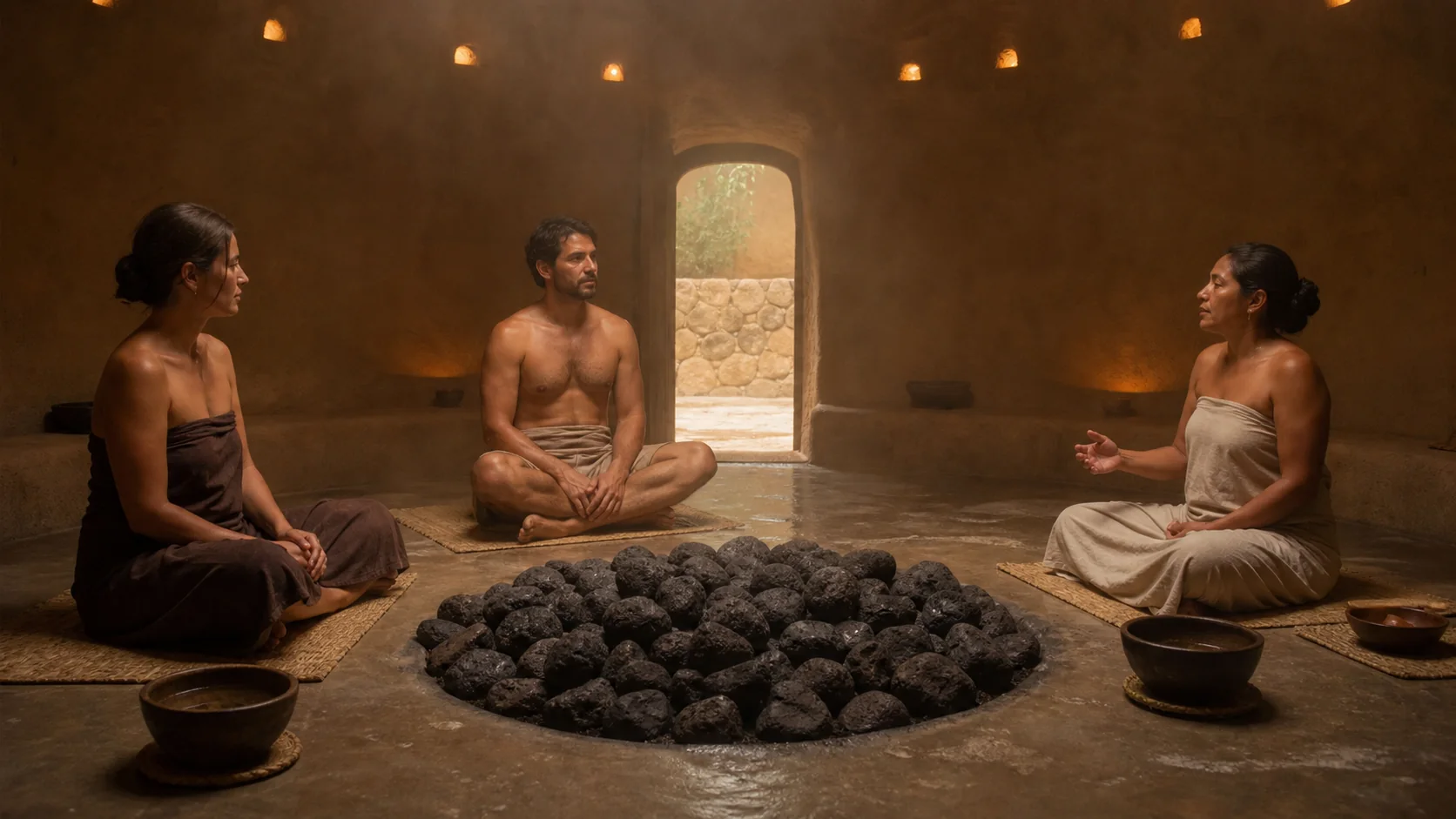
Editorial image note: both photographs in this feature are original AI-generated illustrations. They do not depict a named property, community, ceremony, institution or person.
Safety should feel calm, specific and visible
A responsible heat experience begins before the chamber. Pre-arrival information should describe the environment honestly and invite guests with relevant health conditions, pregnancy, current illness or concerns about heat tolerance to seek appropriate individual guidance. A property should follow applicable local regulation and clinical advice rather than publishing a simplistic universal list of who may enter.
Screening must lead to action. The host needs a defined maximum group size, a method for confirming that guests understood the briefing, visual contact where appropriate, a way to reduce intensity and permission to end the session. Water and cool recovery should be accessible. Alcohol or other impairment should not be normalised as part of the ritual.
The route out deserves special attention. Darkness, steam, a low door and unfamiliar floor levels can combine into an accessibility and evacuation problem. Guests should know where the exit is, how to signal discomfort and whether they can sit closer to it. The strongest design allows someone to leave discreetly without climbing over others or disrupting the group.
Incident review is part of cultural respect. A practice is not honoured by pretending risk does not exist. Record what happened, respond clinically when necessary, consult the cultural and operating leads, and change the protocol if the evidence requires it.
Consent, privacy and the pressure to perform
Guests may arrive expecting an intense rite of passage because travel media and social platforms reward spectacle. That expectation can make it harder to admit discomfort or decline a ceremonial element. Luxury hosting should lower the social cost of choice: explain that intensity is not a test, leaving is not failure and no spiritual response is required.
Photography requires its own rule. A cultural practice should not become content simply because a guest has a phone. Operators should agree with knowledge holders which moments, objects, songs or spaces may be recorded, then brief guests clearly. If photography is allowed, consent from every identifiable participant remains necessary; a ticket is not a model release.
Privacy also includes what happens after the session. Facilitators should not press guests to disclose trauma, health history or emotional experiences in front of a group. A hospitality ritual can invite reflection without practising therapy. Any concerning physical or psychological response should move into an appropriate private support or referral process.
These standards sit naturally beside good luxury spa etiquette: advance clarity, bodily autonomy, discretion and care for the shared space. They are not barriers to immersion. They are what make immersion trustworthy.
Designing a sense of place without inventing heritage
A compelling contemporary temazcal can be beautiful without copying a known archaeological form or mimicking an identifiable community structure. The design team can begin with climate, local soil and stone, water, fire, prevailing wind, cleaning, acoustics, accessibility and the expertise of practitioners who will actually use the room. This produces a more specific architecture than adding generic motifs at the end.
Material provenance deserves scrutiny. Volcanic stone, timber, clay, plants and textiles may carry environmental or community costs. Operators should know where materials come from, whether harvesting is sustainable and whether a plant can be sourced consistently without taking a household or medicinal resource away from local use. Scarcity should not become an aesthetic.
The landscape matters too. Shade, night lighting, noise, water use and the route from changing room to chamber shape the experience. A desert property should not create a lush fantasy that consumes excessive water to signal wellness. A respectful luxury setting can make seasonal dryness, native planting and restrained comfort part of the story.
Interpretation should remain proportionate. A short, accurate introduction, contributor credit and a conversation with the host can be more meaningful than walls covered in myth. If a symbol, deity or phrase is used, the team should know why it belongs there and who authorised its use.
What sophisticated travellers should ask
Before booking, look beyond the word “ancestral”. Ask who leads the session, where they learned the practice and how the property works with local knowledge holders. A credible answer will be specific without exposing knowledge that a community considers private. It should distinguish a culturally rooted ceremony from a contemporary steam experience.
Request the practical details: session length, group size, heat format, scent or smoke, clothing, touch, accessibility, exit process and recovery. Ask whether there is a non-ceremonial option. If the experience is bundled into a long treatment, confirm that leaving the heat portion does not cancel the rest of the booking.
Listen carefully to claims. “Grounding”, “renewal” and “connection” can describe an intended experience; they are not guaranteed outcomes. Claims to detoxify the body, cure a condition, heal trauma or create a predictable spiritual transformation deserve scepticism. A serious property can describe meaning and possibility without scripting what a guest must feel.
Finally, ask how local people benefit. The answer might involve employment, leadership, commissions, ongoing training, local purchasing or a community-directed programme. The point is not to demand a public ledger at reception. It is to notice whether reciprocity is part of the design or merely absent from the story.
An operator blueprint from concept to review
Begin with relationship mapping
Identify the communities, practitioners, historians, designers, health and safety specialists, regulators and employees affected by the concept. Decide who has cultural authority, who has operational responsibility and who can stop a decision. Document the gaps before drawing the guest journey.
Write an origin and adaptation statement
Create a concise internal document explaining what the experience is, where its knowledge comes from, what has been adapted, what is excluded and which claims are permitted. Use it to align architecture, training, menus, public relations and reservations. Review it with the participating knowledge holders.
Prototype with different bodies and choices
Test the briefing, seating, heat progression, sound, visibility, route out and recovery with people of different sizes, mobility, sensory needs and heat familiarity. Test the option to leave as carefully as the ideal uninterrupted sequence. A ritual is not inclusive if the only dignified path is completion.
Create a dual quality review
Operational review should cover incidents, maintenance, hygiene, guest understanding and facilitator performance. Cultural review should cover language, representation, permissions, contributor relationships and benefit. Neither can replace the other.
Keep the promise narrow
Present the experience as guided heat, rest, cultural learning or reflective ritual according to its actual design. Avoid turning it into evidence for a whole resort’s medical credentials. If the property also runs social sauna or other bathing programmes, give each tradition its own name, host training and guest explanation.
The World Luxury Spa verdict
The contemporary temazcal can become one of luxury wellness’s most meaningful experiences because it brings architecture, heat, community, landscape and reflection into one chamber. Its power does not come from making the room hotter, darker or more exotic. It comes from the quality of the relationships that make the session possible.
The winning properties will resist two temptations: treating living heritage as a decorative asset and treating spiritual language as medical proof. They will name their adaptations, keep knowledge holders present, share value, engineer safety, protect consent and let guests experience the ritual without dictating a transformation. In this field, restraint is not a loss of theatre. It is the clearest expression of respect.
Frequently asked questions
What is a temazcal?
A temazcal is a Mesoamerican steam-bathing structure and practice with a long history and varied living uses across communities in Mexico and Central America. It is not one universal ceremony, and contemporary hospitality versions may combine traditional, locally specific and newly adapted elements.
Is a temazcal the same as a sauna or steam room?
No. All involve heat, but their architecture, humidity, duration, social rules, cultural meanings and facilitation can differ. Health evidence from dry sauna bathing should not automatically be treated as evidence for a humid temazcal ceremony.
How can a traveller recognise a culturally responsible temazcal?
Look for specific information about who leads it, the source of the practice, how local knowledge holders participate, what has been adapted, what guests should expect and how the property creates continuing local benefit.
Can a temazcal detoxify the body or treat illness?
A property should not promise detoxification, cure or treatment without appropriate clinical evidence and authority. Purification may have cultural, spiritual or personal meaning, but that meaning should not be converted into an unverified medical claim.
What safety information should be provided before a session?
Guests should receive clear information about heat, humidity, duration, group format, scent or smoke, clothing, touch, accessibility, leaving early and recovery. Anyone with relevant health concerns should seek individual guidance, and the operator should follow applicable local regulation and emergency procedures.
Sources and further reading
- Spa Business: the 5 August 2026 report on a new Mexican luxury spa making a contemporary temazcal central to its signature journeys. Read the lead report.
- Instituto Nacional de Antropología e Historia: an official overview of archaeological evidence and the continuity of temazcal use in Indigenous communities. Explore the INAH record.
- Secretaría de Salud, Mexico: an official explanation of Indigenous traditional medicine as a complex knowledge and care system rooted in distinct worldviews. Read the government overview.
- UNESCO Intangible Cultural Heritage: ethical principles on community leadership, consent, benefit, cultural diversity and the risks of decontextualisation or misrepresentation. Read the ethical principles.
- World Health Organization: the Global Traditional Medicine Strategy 2025–2034, joining respect for Indigenous knowledge with evidence, safety, regulation and community engagement. Read the WHO strategy.
- Estudios de Cultura Maya via SciELO: a peer-reviewed study of Maya steam-bath architecture, construction and varied forms across Mesoamerica. Read the research article.
- Evidence-Based Complementary and Alternative Medicine via PubMed: a systematic review of dry sauna research whose limitations also show why evidence should not be transferred uncritically to different heat practices. Read the systematic review.